The checklist
The air horse checklist
Every step between the stable door and the hold, in the order it is asked for, with a source against each item that has one.
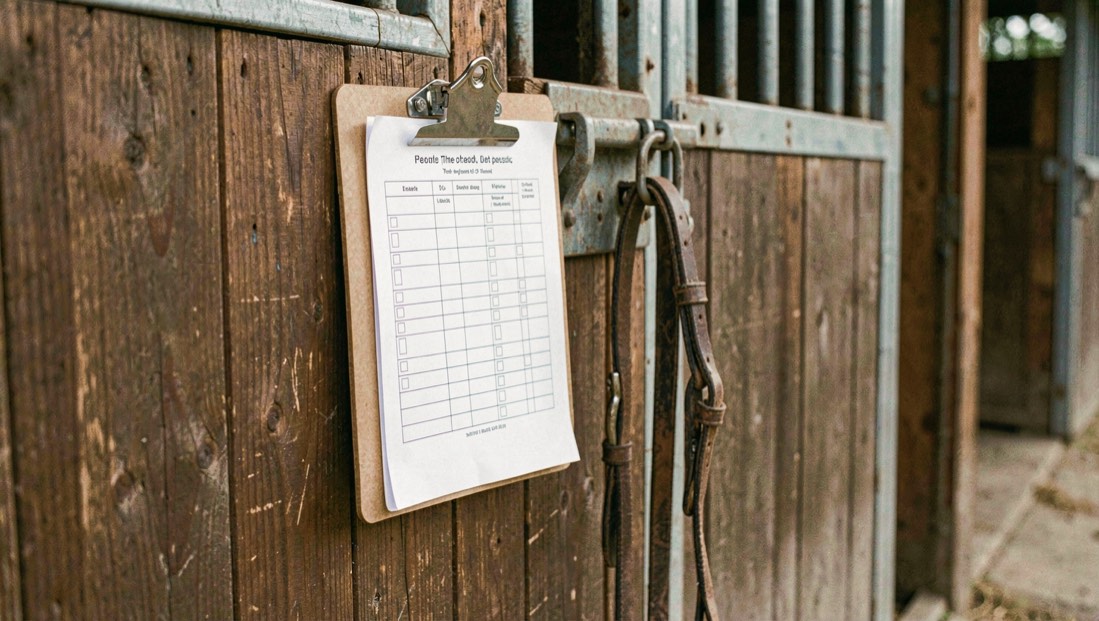
This is the page this address is kept for. It is a working checklist for an intercontinental horse shipment, ordered the way the questions actually arrive, and written so that each item says who decides it and where the rule comes from. It is not a booking form and this desk arranges nothing.
1. What has to be known before anything is booked?
- Destination import conditions. Obtain the current conditions from the destination's own veterinary authority. They determine every other item on this list and they change.
- Residency history. Establish where the horse has lived for the preceding two months and what it will transit. The United States determines quarantine length from the animal health status of the countries of residence in the 60 days before import, the countries transited, and the purpose of entry.
- Purpose of entry. Competition, breeding, temporary or permanent residency are different imports for the same animal.
- Entire or not. A sexually intact horse over 731 days old from a region affected by contagious equine metritis faces a second quarantine in the United States. This is a commercial decision taken before, not after, the purchase.
2. Reservations that must exist before departure
- Quarantine space. Where the destination requires it, the place is reserved before the horse is exported. Australia requires a minimum of 14 days of post arrival quarantine at Mickleham or an approved arrangement site for horses from approved countries other than New Zealand and New Caledonia.
- Pre export isolation. Australia requires 14 days of isolation immediately before export at an approved facility, and 21 days for horses from the United Arab Emirates. This is residency time and cannot be compressed.
- Pallet position. Decide one, two or three horses per stall. That decision is the price, and it cannot be changed on the apron.
3. The laboratory work
Samples must be drawn inside the window the destination allows, counted from the date of sampling rather than the date of the result. Separately, the United States tests on arrival, through its own national laboratory, for dourine by complement fixation, equine infectious anaemia by agar gel immunodiffusion, equine piroplasmosis by both complement fixation and competitive ELISA, and glanders by double antigen ELISA with Western blot confirmation. A non negative result can extend quarantine by up to 28 days with retests at 14 day intervals, and can also hold the other horses in the same shipment.
4. Who signs the certificate, and in which system?
- Who issues. A full time salaried government veterinarian of the exporting country's national competent authority, or an authorised veterinarian acting on their behalf.
- Who endorses. A full time salaried government veterinarian of that same authority. Issuing and endorsing are two acts.
- Which model. For entry into the European Union, the models are set out in Annex I to Commission Implementing Regulation (EU) 2021/403 and issued through TRACES, which pre notifies the border control post.
- National booking deadline. In Denmark, export is pre registered through the export portal of the Danish Veterinary and Food Administration and the official inspection must be booked no later than 09:00 two working days before export.
5. The animal, in the weeks before
- Loading practice in a box, including standing shut in while nothing happens.
- Fitness for transport, which European law makes a precondition rather than a courtesy.
- The horse's own hay, in flight quantity, so the gut is not changed on the same day as everything else.
- A written note of the animal's normal demeanour and resting respiration, for the attendant's baseline.
- No sedation arranged privately: the industry standard makes it the shipper's responsibility to ensure animals are not tranquilised without veterinary approval and supervision.
6. On the day, and after
Horses are loaded into stalls on the apron and lifted aboard by a high loader, hours before departure. An attendant travels on the main deck and keeps a timed log of what each animal ate, drank and did, including through any technical stop, where the animals stay loaded. At destination the log is handed over with the horses, and in most cases the animal goes directly into quarantine rather than to a stable of its own. The checklist ends where the quarantine begins, because from that point the calendar belongs to the destination authority.
This checklist is a documentary summary, not advice for a named animal and not a substitute for the destination authority's current requirements or the carrier's conditions of acceptance. Where a figure is given it is sourced below and dated; where no figure is given, it is because this desk has not verified one.
Sources read on 5 September 2026: APHIS, Importing Live Equines and Equine Germplasm into the United States (updated 14 August 2026) and USDA Import Testing of Horses; APHIS, CEM Testing for Imported Horses (updated 10 June 2026); Australian Department of Agriculture, Fisheries and Forestry, Importing horses; European Commission, Equine animals; EUR-Lex, Council Regulation (EC) No 1/2005; IATA, Significant Changes to the 49th Edition of the Live Animals Regulations; Fodevarestyrelsen, Eksportportalen.