Welfare in Flight
Welfare in flight
The written requirements are shorter than most people expect, and they point somewhere specific.
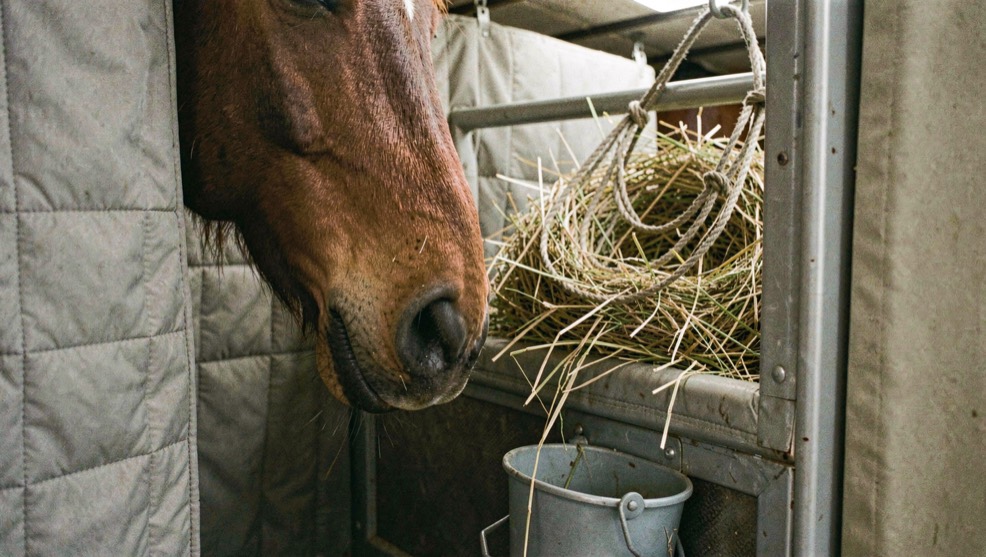
Welfare in the air is discussed in adjectives and regulated in a handful of sentences. Reading those sentences is more useful than any general reassurance, because they show exactly where the responsibility sits and what has deliberately been left to the operator and the attendant.
What does the law say, and what does it decline to say?
Council Regulation (EC) No 1/2005 requires, at Annex I, Chapter II, paragraph 4.2, that animals be transported only in conditions where air quality, temperature and pressure can be maintained within an appropriate range for the entire journey, having regard to the species. It names three variables and sets no number for any of them, while the same annex does set explicit numerical provisions for long road journeys. For air transport it also points at the IATA Live Animals Regulations for the container itself. The rule is a duty of result, not a thermostat setting.
Feed and water: the rule and the record
The container standard covers preparations before dispatch and feeding and watering, while what is actually offered in flight, and whether it is taken, is recorded by the attendant. The written rules define who must be able to do what; the log is the only record of what happened. A haynet is both feed and occupation, and the simplest honest instrument aboard: a horse that keeps eating has settled, and the instrument only works if the hay is the animal's own, so that a refusal means something.
Why does a quoted temperature mean so little?
Because the value comes from the aircraft type, the operator's live animal procedure and the crew, not from a statute. A figure quoted without an aircraft type and an operator behind it is close to meaningless, and this ledger does not repeat one. What can be verified is what the animal is doing: a horse that keeps eating has settled, and a horse that stops eating is reporting something before any instrument does. The legitimate question to an operator is not "what temperature" but "which procedure, for which aircraft, watched by whom".
The sedation rule, as written
The industry standard does not ban sedation. IATA's published changes for the 49th edition of the Live Animals Regulations added a section on sedation, tranquillisation and psychoactive drugs and amended the shipper's responsibilities to include ensuring that animals are not tranquillised without veterinary approval and supervision. The obligation sits with the shipper, it is checked at acceptance on the apron, and a horse that arrives visibly affected by something the declaration does not mention is a horse the carrier may refuse to load.
Why a horse that can balance travels better
A horse in a stall is standing, unrestrained except at the head, and every change of attitude is met by the animal shifting its own weight. Dulled proprioception does that job less well, in a box that cannot be stopped. A sedated horse is also a horse that cannot be read, and the whole monitoring method rests on comparing what the animal is doing with what it normally does. What is done instead is preparation, familiar hay, the right partition setting, company and an attendant who knows the animal.
What the two chapters in this section cover
The first sets out the three environmental variables, who actually decides their values, and how hay and water are handled in a stall that is moving. The second explains the sedation rule, which is more precise than the folklore: sedation is not banned outright, but the industry standard makes it the shipper's responsibility to ensure that animals are not tranquilised without veterinary approval and supervision, and a dulled horse is both a worse balancer and an unreadable patient. Neither chapter gives a temperature or names a drug, and both say why.
Read next in this ledger
02Chapters in this section
What the hold is managed to, and why sedation is taken out of the shipper hands.
-
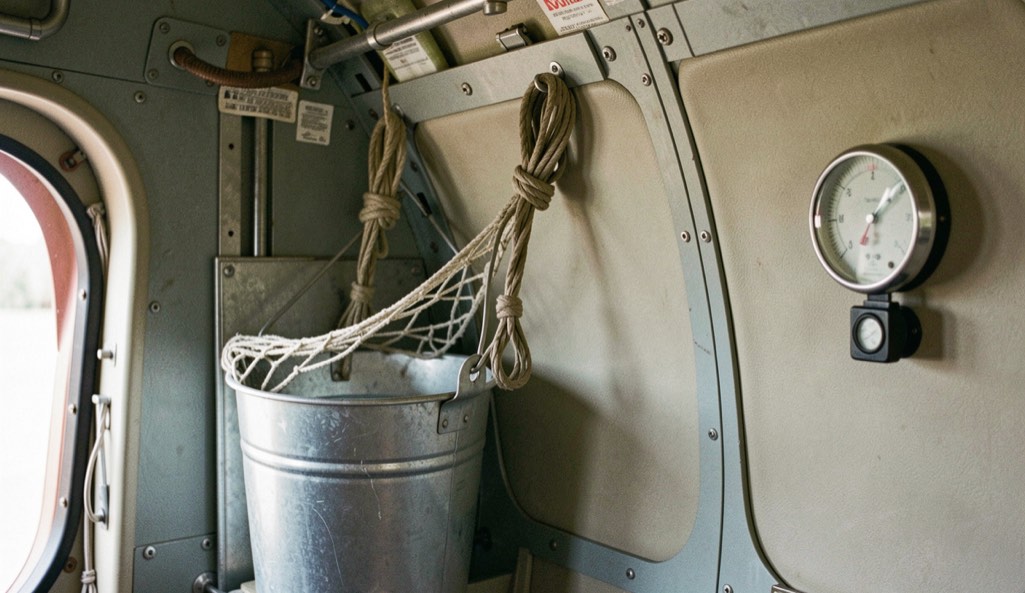
Hay, water and hold temperature
Welfare in flight is not a feeling. It is a haynet, a bucket and a dial, and the law says less about the dial than people assume.
Welfare in Flight
-
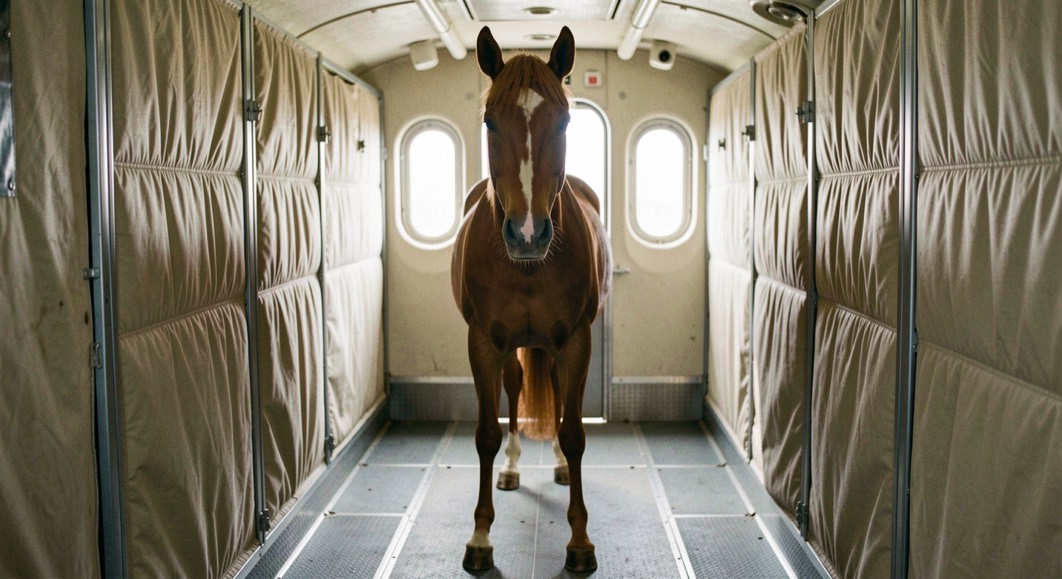
Why sedation is usually refused
The standard does not forbid sedation outright. It removes the decision from the shipper and gives it to a veterinarian.
Welfare in Flight