The Groom
The travelling groom
Horses on a freighter are not unaccompanied cargo. Someone sits a few metres away for the whole flight.
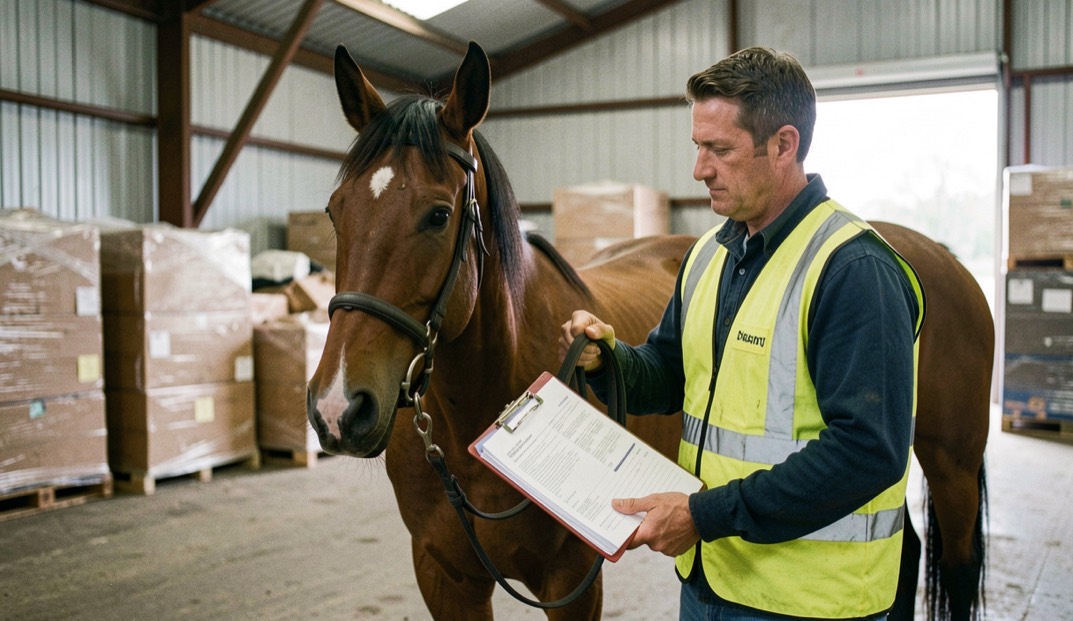
The attendant is the part of the system that cannot be replaced by equipment. Cameras show a stall; they do not show that this particular horse normally eats through a flight and has stopped. The whole in flight welfare method rests on somebody who knows the animal being close enough to notice, and willing to write it down.
What does the role actually consist of?
Mostly the ground: arriving hours early, checking horses against documents, loading the stalls on the apron, hanging hay, filling water and making sure that everything needed in flight is within reach before the box is closed. In the air it is observation on a schedule, water offered and logged, hay topped up, and the discipline not to open a stall for reassurance. At destination it is a handover of both the animals and the record. The seat on the main deck is a supernumerary one, under the captain's authority like any other person aboard.
Longer than the flight
The attendant travels out with the animals and usually returns separately, on another aircraft and often on another day, so a yard nominating somebody is committing that person for a round trip rather than for a shift. On shipments where the destination requires the attendant to enter quarantine, the commitment is longer still. Add the documents that a cargo routing needs and a passenger routing does not, including transit authorisation for a technical stop in a third country, and the role begins weeks before the horse is loaded.
The constraints that come from outside horsemanship
IATA's training competencies, the carrier's acceptance procedures and the destination's biosecurity rules all touch this role. Australia, for example, publishes standing notices to industry that include specific requirements for grooms at its post entry quarantine facility, separately from those for veterinarians and for the drivers who move imported horses. The person handling the animal inside quarantine is regulated in their own right rather than admitted as staff, and the conditions signed before landing can end that access if they are not kept.
Why is the log the deliverable?
Because it is the only document created during the flight, and the only account the receiving veterinarian has of ten or fifteen hours nobody else witnessed. A baseline written before departure, times in one zone, hay and water offered and taken, droppings, demeanour at rotation, descent and the stop, anything done and anything not done: kept plainly, in ink, it changes what happens at the other end. A memory offered afterwards by somebody who has not slept is an opinion, and the horse in quarantine is examined by people who have never seen it before.
The two people yards confuse
The person who prepares and loads the horse on the ground and the person who flies with it are often not the same, and on a large shipment they cannot be. Ground handling at a cargo terminal is done by staff trained and cleared for that apron who may never board; the attendant is the one who stays with the consignment. Neither is the owner's representative in a commercial sense, and neither can renegotiate anything about the shipment while it is under way. A yard sending one person to do both jobs sometimes learns at the terminal that the airside part is not theirs.
What the two chapters in this section cover
The first walks through a groom day from the terminal to the handover, including what the checks really are, what changes during a technical stop, and why the log is the deliverable. The second covers what the person must hold before any of that: training, travel documents for a route that is not a scheduled passenger service, biosecurity conditions at the destination, and the difference between the handler on the ground and the attendant in the air. The record itself, entry by entry, is on the flight log page of this ledger.
Read next in this ledger
02Chapters in this section
The day itself, and what the person in that seat has to hold.
-
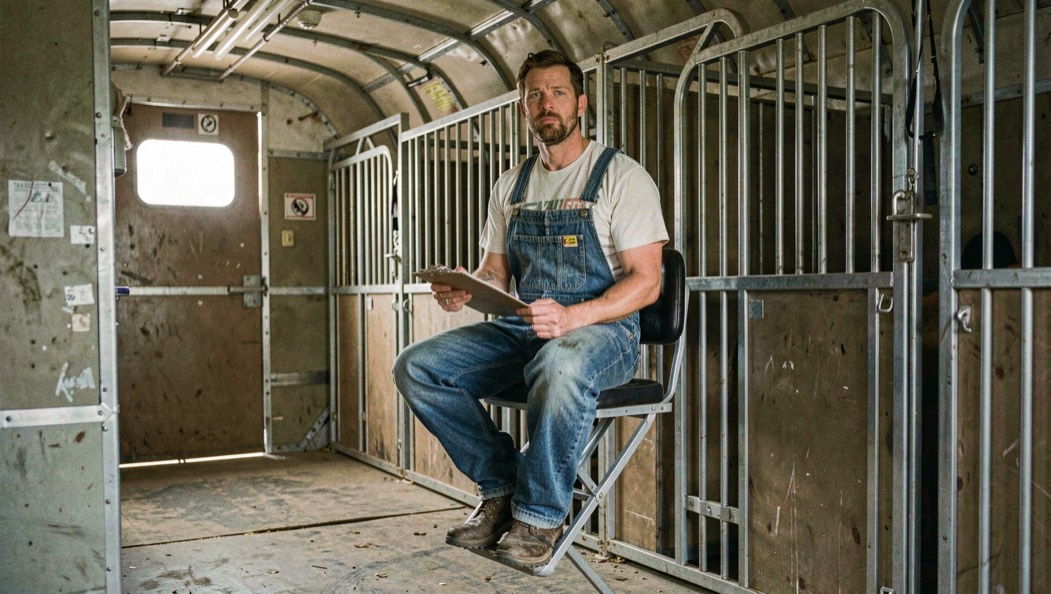
A day aloft with the travelling groom
One trained person stays within a few metres of the stall for the whole flight, and that day looks like no other day in horses.
The Groom
-
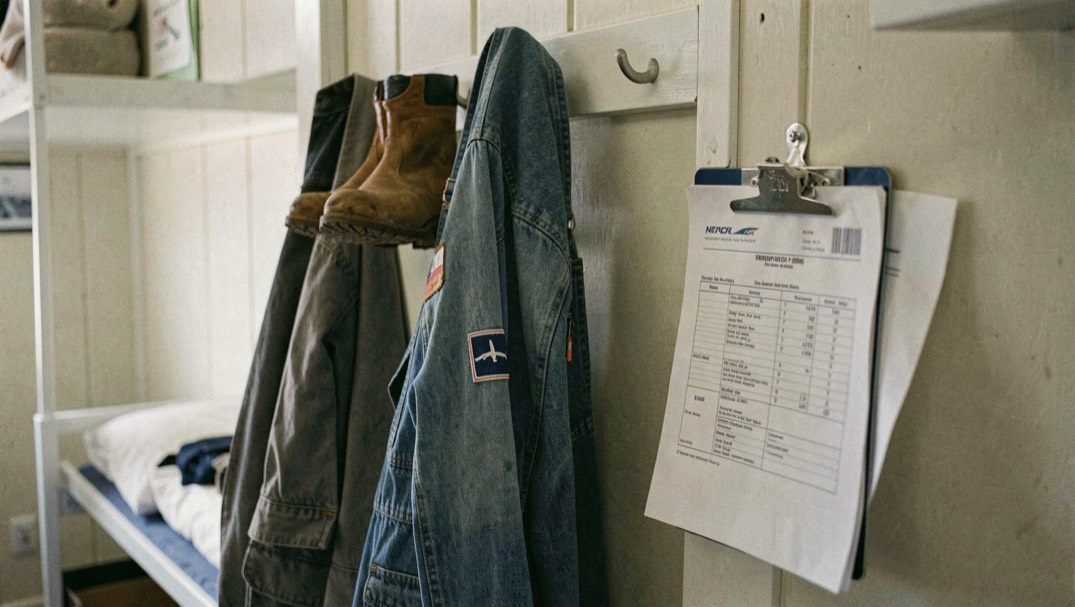
What a flying groom must hold
The seat on the main deck is the easy part. Getting to it means training, documents and, at some destinations, a biosecurity contract.
The Groom