Jet Stalls
Jet stalls
The container is the first decision of an air shipment and the one that constrains every other.
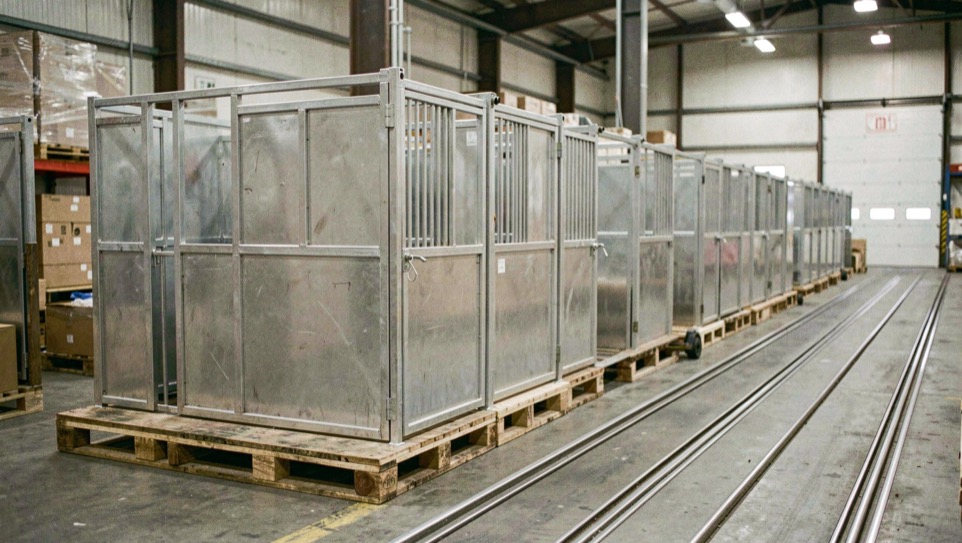
Everything else in an air shipment follows from the box. The stall determines which aircraft can carry the horse, which airports have the equipment to load it, how many animals share a pallet position and therefore what the freight costs, and what the attendant can reach once the deck is closed. People arrive at this subject asking about airlines. The useful first question is about containers.
What is a jet stall, in one paragraph?
A rigid metal enclosure built on a pallet base that mates with the roller floor of a freighter's main deck. It is lifted aboard by a high loader rather than driven into the aircraft, locked into a pallet position, and not moved again until landing. Internal partitions can be set so that the same frame carries one, two or three horses, which is the whole of the commercial difference the trade dresses up as travel classes. The sides are solid to shoulder height and open above; access is from the front, because a loaded deck leaves no room to walk around.
Who writes the rules for it?
IATA. The container standard is published in the Live Animals Regulations, and horses fall under Container Requirement 2. In the European Union that private standard is given legal force for air transport by Council Regulation (EC) No 1/2005, whose Annex I, Chapter II, section 4 requires containers, pens or stalls complying with the IATA regulations. The full container text is a paid publication, so this ledger names the requirement, quotes what IATA publishes openly and does not invent dimensions. The carrier's own acceptance checklist is the second document that governs the box, and it is applied on the apron by the people who load.
Why the box comes before the airline
Because the stall fixes the aircraft, and the aircraft fixes the airports. A stall enters a freighter through a side door or a raised nose, and either way it needs a high loader that reaches the deck of that specific type. An airline that flies horses is an airline whose freighters and ground contracts can take the container; a route exists where those conditions meet a veterinary border facility. Choosing an airline first and hoping the box follows is the order that produces surprises on the day.
The price is a partition, not a ticket
The freight charge follows the pallet position. A three horse stall shared three ways is the cheapest way to fly a horse and the tightest; the same frame set for two, or for one, gives the animal room and the attendant access at a higher price per head. That is a booking decision, set on the ground and impossible to change once the locks are on. It also decides who the horse travels with, which matters later, when a laboratory result at destination can hold every animal in the same shipment.
What the yard has to do before the box
A horse that has never stood shut in a box while nothing happens will not learn it on a cargo apron. The weeks before the flight are spent teaching three behaviours in order: walking onto a hollow, moving floor; standing still in a confined space with a person at the head; and accepting a closed box for a long, uneventful time. European law makes fitness for transport a precondition of the journey, and a horse that arrives at the terminal already distressed can be refused by the veterinarian, the handler or the captain.
What the two chapters in this section cover
The first takes the stall apart: the frame and its pallet, the partitions, the front gate, the floor and the tie rings, and it sets out where the standard comes from and what remains behind a paywall. The second deals with the part that happens weeks earlier, in a yard, and that decides whether the airport day is short: teaching a horse to load, to stand and, hardest of all, to wait quietly in a closed box while nothing happens. Neither chapter names a model of stall or a training method as the right one; both say who decides and where the rule is written.
Read next in this ledger
02Chapters in this section
The box, and the weeks of yard work that precede it.
-
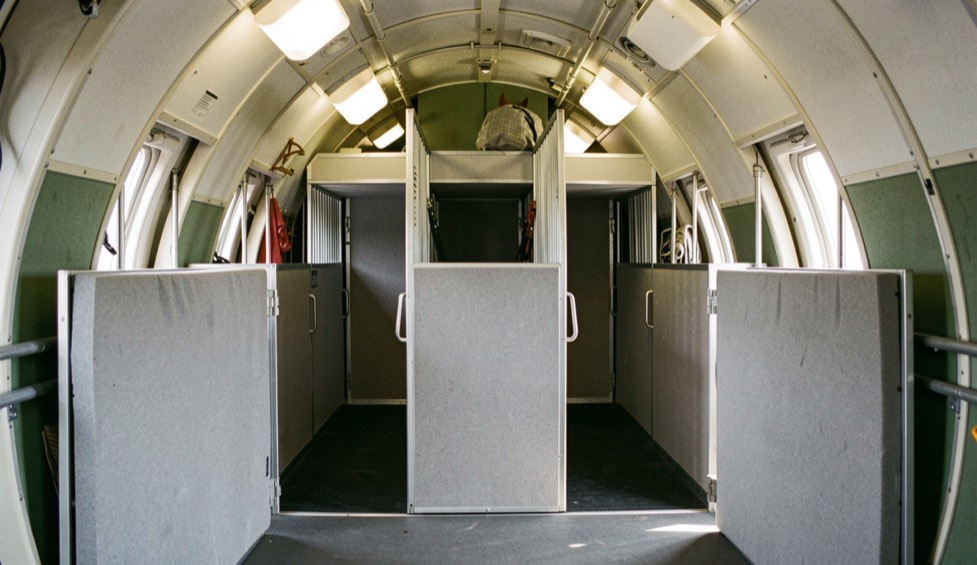
The anatomy of a jet stall
What the animal actually stands in between wheels up and wheels down, drawn part by part, and the standard that governs the box.
Jet Stalls
-
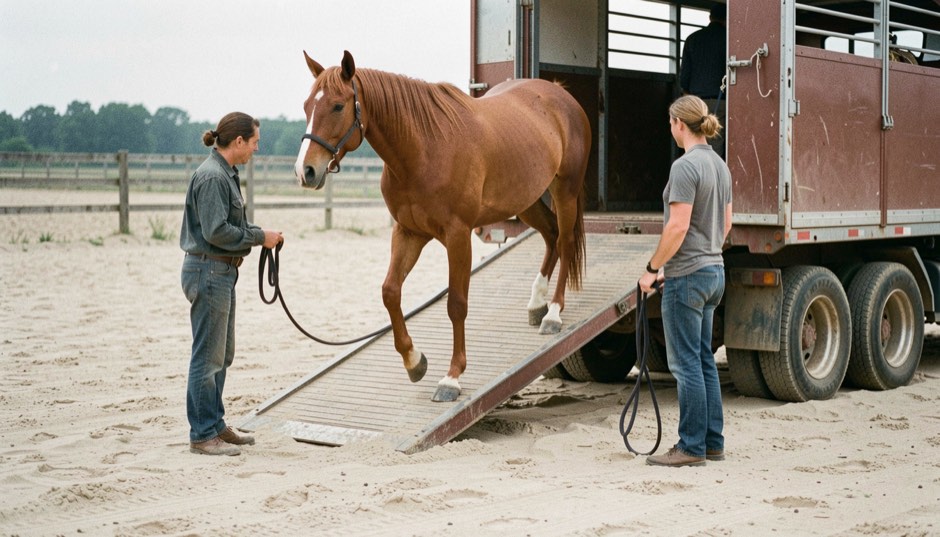
From paddock to box: the first loading
The airport day is won or lost weeks earlier, in a yard, one plank and one bucket at a time.
Jet Stalls