Cargo Routes
Cargo routes
A route is not the short way. It is the equipped way, and doors decide most of it.
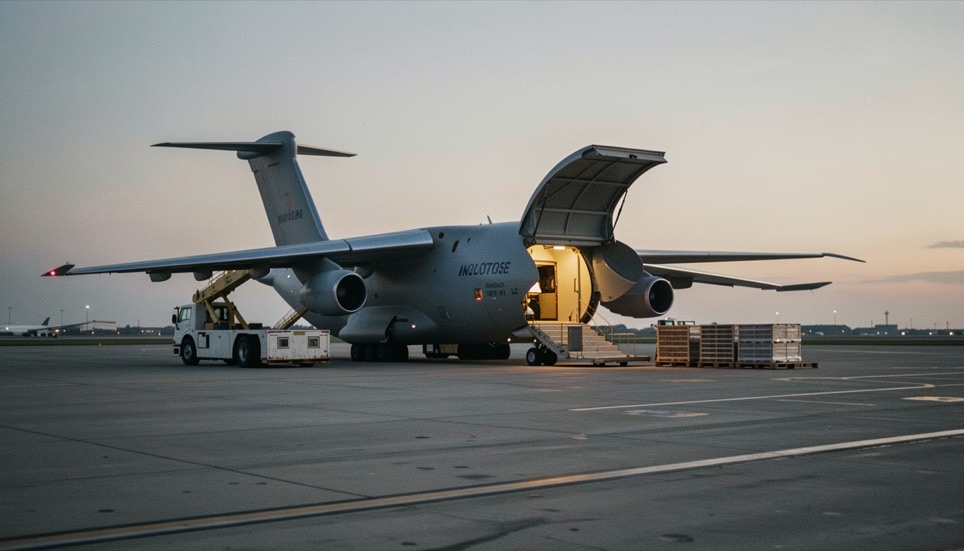
People assume a horse flies from the nearest airport to the nearest airport. It flies from an airport that can load the stall onto that aircraft type, to an airport whose veterinary border facility can receive the consignment, with everything in between decided by range, payload and curfews. That intersection is usually small, and it is why routings look longer on a map than they need to.
Three lists that have to overlap
The first is airports with cargo handling that accepts live animals at all. The second is airports whose ground equipment matches the aircraft type, since a high loader has to reach the deck height of the specific freighter and fit its door, side or nose. The third is airports where the destination's veterinary import control actually operates, which in the European Union means a border control post able to receive the consignment notified in TRACES. A country with a dozen international airports may satisfy all three at only one of them.
Why do curfews and duty hours matter to a horse?
Because they sit on top of all three lists and move the whole chain. A night restriction at either end can move a departure by hours, and a departure that moves can miss the working hours of the veterinary border post at the other end, which turns a flight delay into an extra day for the animals. Crew duty limits have the same effect from the other side: a crew that times out cannot simply wait on the apron, and the aircraft leaves when a crew is legal, not when the horses are ready.
Charter, part charter or scheduled freight
The commercial form follows the same constraints. A full charter buys the routing and the timing at the cost of filling the aircraft. A part charter shares the deck, which means shared timings and shared cohorts, and cohorts matter when a laboratory result at destination can hold other animals from the same shipment. Scheduled freight is the cheapest and least flexible, and it puts the stall into the ordinary priorities of a freight network. The choice is made before the veterinary work starts, because the certificate is written for the date and route it fixes.
What does a technical stop change?
Not the place the horse is standing, which stays locked on the deck, but the conditions around it. The engines stop, ground units take over, the deck can warm, the floor stops vibrating and strangers can board. The attendant keeps the same log through that hour and offers water while the aircraft is still. A stop is planned weeks earlier, when payload is matched to range, and it cannot usually be traded away late: removing it means fewer animals or a different aircraft, and both change the price and the date.
Reading a proposed routing
Three questions settle most proposals. Which aircraft type is actually planned, because the type determines the door and therefore the airports available. Which airport receives the animals, and does the destination's veterinary control operate there or does the consignment clear elsewhere. And is there a technical stop, because a stop is an extra hour in the stall for the horse and an extra set of ground arrangements for everybody else. A fourth is worth adding when the first answer is vague: what happens to the routing if the aircraft is substituted.
What the two chapters in this section cover
The first explains the two ways a stall gets onto a main deck, through a side door or a raised nose, why that choice narrows the airport list, and what a shipper should ask about a proposed leg. The second deals with technical stops: why the horses stay loaded through a fuel stop, what changes for them during that hour, who remains responsible, and how a stop shows up in a quotation. Neither names an aircraft type, an airline or an airport as the right one, and neither gives a price.
Read next in this ledger
02Chapters in this section
How stalls get aboard, and what happens when the aircraft has to stop.
-
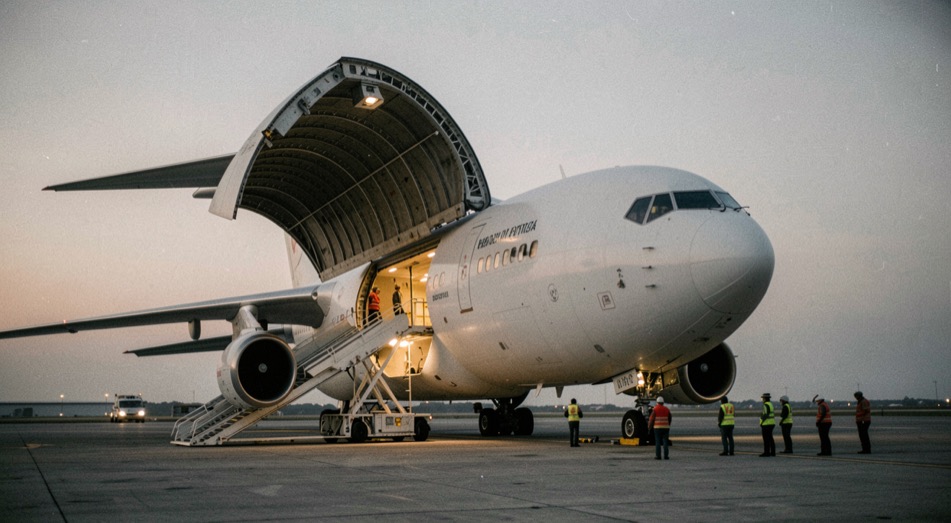
Nose loader or side door
Same animal, same stall, two very different doorways into the hold, and routes exist because of that difference.
Cargo Routes
-
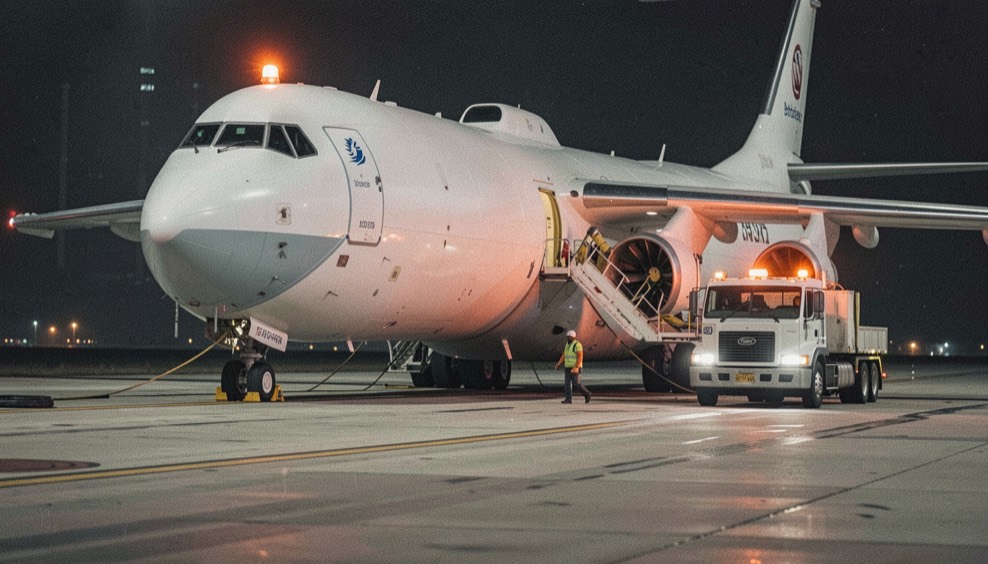
Technical stops on the ramp
The aircraft refuels with the animals aboard and the deck closed, and the attendant keeps the log through the noisiest hour of the trip.
Cargo Routes