Quarantine
Arrival quarantine, country by country
The flight ends at the ramp. The paperwork ends days or weeks later, behind a fence the destination country has drawn.
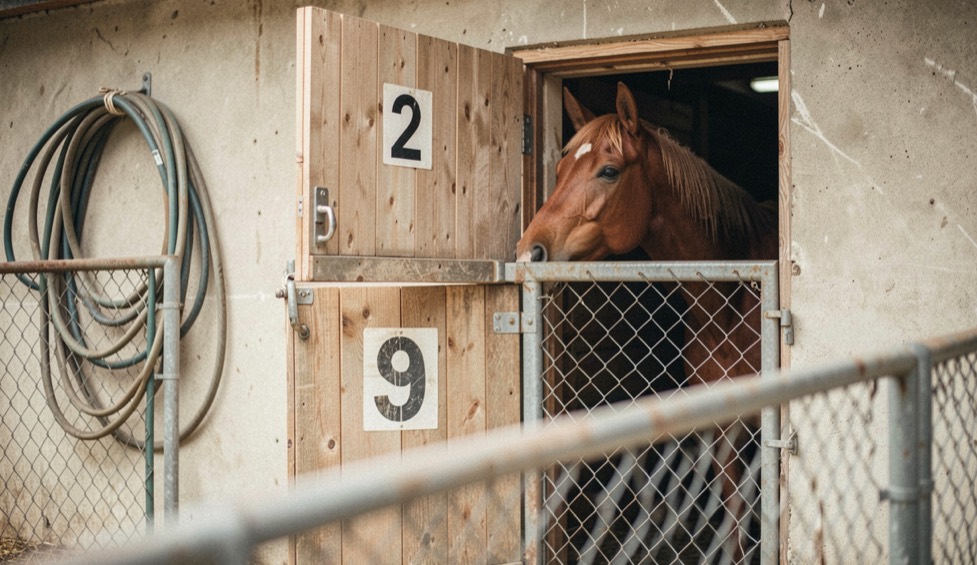
Buyers plan for the flight. What catches them is what happens after it. Post arrival quarantine is a fixed, published number of days in a facility the importer must usually book before the horse leaves, and it is the part of the timetable that cannot be shortened by paying more. Two systems are documented here because they are unusually explicit: the United States and Australia.
The United States: three, seven or sixty days
The rule is not a single duration. The Animal and Plant Health Inspection Service states that "Quarantine may be 3 days, 7 days, or 60 days", and that the length is determined by three things: the animal health status of the country or countries where the horse resided in the 60 days before import, the animal health status of the countries transited before arrival at the United States port of entry, and the purpose of entry, which it lists as competition, breeding, permanent or temporary residency.
Two consequences follow, and both surprise people. First, the clock that decides the quarantine length started sixty days before the flight: a horse that spent a fortnight in a country with a different disease status has already changed its own quarantine category. Second, the purpose of entry is part of the calculation, so the same animal arriving to compete and arriving to stay are not the same import.
Why does the sixty day case exist?
Because of African horse sickness. APHIS states that horses entering the United States from countries affected by African horse sickness must undergo a 60 day post arrival quarantine in a specially designed USDA Animal Import Center, kept inside and under strict biosecurity measures for the entire period. The disease is carried by biting midges, which is why the animal is kept indoors rather than merely fenced, and why no individual test result shortens the stay: the risk being managed is the origin's disease situation, not the horse's own paperwork. This is a different kind of facility from the ordinary import quarantine, and the number of places is finite, which is why the reservation is made long before the booking.
The reservation is part of the import, not part of the arrival. Where the destination requires a quarantine place, the space is reserved before the animal is exported. A confirmed flight with no confirmed box on the ground is not a confirmed journey.
Australia: fourteen days at each end
Australia publishes an equally explicit rule, and it applies twice. Horses imported from approved countries other than New Zealand and New Caledonia must complete a minimum of 14 days of post arrival quarantine at the government biosecurity facility at Mickleham in Victoria, or at a privately run approved arrangement site. Before that, the horse must complete pre export quarantine at a departmental approved facility immediately prior to export, involving 14 days of isolation from horses not of equivalent health status, extended to 21 days for horses from the United Arab Emirates.
New Zealand and New Caledonia are the exception: horses from those two countries do not complete post arrival quarantine, because both are treated as low risk, although an import permit and a veterinary health certificate including pre export isolation are still required.
Reading a quarantine timetable before you buy
The mistake is to start from the purchase date and add things. The timetable only comes out right when it is read backwards from the day the horse is actually needed, because every step below has a duration the buyer does not control.
- Count backwards from the date the horse is needed, not forwards from the date it is bought.
- Add the pre export isolation, which is a residency requirement and cannot be compressed.
- Add the flight and any transit, remembering that transit countries change the arrival category.
- Add the post arrival quarantine, and then add the retest calendar if a laboratory result comes back non negative.
- Only then look at the competition calendar.
Done this way, the answer is usually a date later than the buyer hoped, and it is better to learn that on paper than at a fence.
Why do the durations differ so much?
Because they are not a measure of bureaucratic enthusiasm. They track incubation periods and vector seasons for the diseases the destination is protecting itself against, and they track how much the destination trusts the origin's surveillance. A short quarantine is a country saying that the origin's surveillance is trusted and the remaining risk is the animal itself. A sixty day quarantine is a country saying that the risk is the disease situation of the origin, and that no individual test result shortens it. Australia's symmetrical rule, fourteen days at each end, adds a third idea: that the animal's health status is fixed by isolation before it leaves, and checked again after it lands, so that neither side has to trust the journey in between.
What this page does not claim
Only two destinations are described, and only as their authorities published them on the date below. Quarantine requirements change with disease events, and country lists are revised without notice. The names of facilities are given because the authorities publish them, not as recommendations. Confirm the current conditions with the destination authority before committing to any timetable.
Sources read on 5 September 2026: APHIS, Importing Live Equines and Equine Germplasm into the United States, page updated 14 August 2026; Australian Department of Agriculture, Fisheries and Forestry, Importing horses. Breeding animals face a separate regime, set out in CEM quarantine for breeding horses.